The forest our ancestors planted — the power that sustains the village they built先人が植えた森が、今、村を支える力になる。
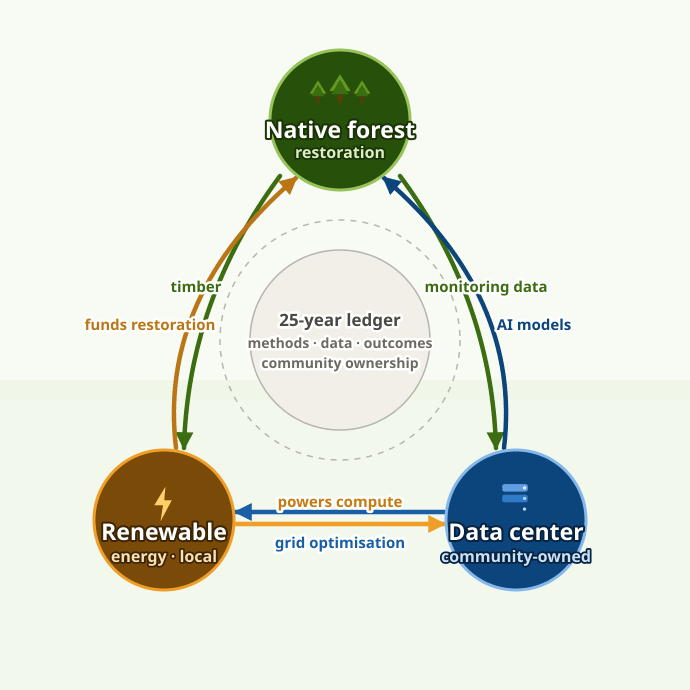
The Mitsue Project repurposes an unused school or a disused village factory building and the forests around it into a single, transparent, openly replicable demonstration of rural revitalization — modest in scale, patient in horizon, built to be copied. 御杖プロジェクトは、未使用の学校または廃村工場と、その周囲の森林を、農山村再生の透明で再現可能な統合モデルへと転換する取り組みです。
Phased replacement of aged sugi (cedar) plantations with native broadleaf species, with private landowners, the Forestry Agency (林野庁), and local contractors. Liability becomes timber revenue; the sugi thinnings are the fuel for the village's biomass CHP — the project's primary energy source.
The 25-year arc aligns to the ecological clock, not the funding cycle.
Native broadleaf trees — oak, chestnut, and konara — produce acorns and nuts that sustain deer, wild boar, and bear through winter. When the forest feeds them, they stay in the forest. Restoring broadleaf cover directly reduces wildlife raids on surrounding crop areas.
老齢化した杉の人工林を、私有林所有者・林野庁・地元事業者と連携しながら、段階的に在来広葉樹へと置き換えます。負債は用材収益へと転換し、杉の間伐材はプロジェクトの主たるエネルギー源である村のバイオマスCHPの燃料となります。
25年という時間軸は、資金サイクルではなく森林の生態的時計に合わせています。
在来広葉樹——コナラ・クリ・ミズナラなど——はドングリや木の実を実らせ、シカ・イノシシ・クマの冬の食料源となります。森が動物を養うことができれば、動物は農地に下りてきません。広葉樹林の回復は、周辺農地への野生動物被害を直接減らします。
The village's primary energy source is a biomass combined heat and power (CHP) system fuelled by sugi forest thinnings — generating 24/7 baseload electricity (primary output) and heat (secondary output). Forest thinning creates paid local labor and a steady village income stream, while the same thinnings become the fuel: the forest powers the village. Solar and EV charging complement this biomass core, serving residents and visitors making the transition away from petrol.
Aging rural distribution lines make blackouts a real and growing risk. Unlike intermittent solar alone, the on-site biomass CHP runs round the clock, keeping the data center and critical facilities running through grid outages — community blackout resilience built in.
One integrated energy system: biomass CHP as the baseload primary, with privately owned solar and EV charging complementary. This also advances Mitsue Village's official Renewable Energy Plan (2025), delivering its "one resilient site" and EV-charging priority.
村の主たるエネルギー源は、杉林の間伐材を燃料とするバイオマス熱電併給(CHP)システムです——24時間のベースロード電力(主たる出力)と熱(副次的な出力)を生み出します。森林の間伐作業は地元の雇用と安定した村の収入源を生み、その間伐材がそのまま燃料となります——森が村を動かします。太陽光とEV充電がこのバイオマスの中核を補完し、ガソリン車からの移行を進める住民・来訪者に対応します。
老朽化した農村の配電線は、停電リスクを年々高めています。間欠的な太陽光だけと異なり、現地のバイオマスCHPは24時間稼働し、停電時もデータセンターと重要施設の稼働を継続します——コミュニティの停電対策として機能します。
一体化されたエネルギーシステム:バイオマスCHPを主たるベースロード電源とし、個人所有の太陽光とEV充電が補完します。これは御杖村の公式再エネ計画(2025年)の実行でもあり、計画の「レジリエント1拠点」とEV充電優先を実現します。
The former Sugano Elementary School (Mitsue Taiken Koryukan / 体験交流館) — the leading candidate — or a disused village factory building — the alternative candidate; final site confirmed in Phase 1 — repurposed as a small-scale, energy-efficient edge-compute facility powered entirely by locally generated renewable energy.
Sized for accountability and community ownership — not hyperscale economics. Designed to be replicated by other depopulating municipalities.
By building a community-owned AI data center powered by locally generated renewable energy — biomass CHP and solar — Mitsue sets a working example of how rural communities can integrate technological progress with ecological sustainability. Not as opposites, but as a single coherent system. A model built to be copied.
旧菅野小学校(御杖体験交流館)――有力候補――または村内の空き工場――代替候補(最終選定は第1段階で確定)――を、地域で発電した再生可能エネルギーのみで稼働する小規模・省エネ型エッジコンピュート施設として活用します。
ハイパースケール経済ではなく、説明責任と地域所有のための規模。過疎に悩む他の自治体が複製できるモデルとして設計されています。
地域が所有し、バイオマスCHPと太陽光という地元の再生可能エネルギーで稼働するAIデータセンターを構築することで、御杖は農村コミュニティが技術の進歩と生態系の持続可能性をどう統合できるかを示す実証モデルとなります。両者は対立するものではなく、一つの整合したシステムです。複製されることを前提に設計されたモデルです。
Charging infrastructure for residents and visitors, tied to on-site generation rather than waiting on capital-intensive grid extension. We build multiple, higher-powered outlets serving the full range of clean energy vehicles — EVs, PHEVs and FCVs — and equip them with external power outlets so vehicles can support the community during disasters. This follows Japan's goal of 100% electrified new passenger-vehicle sales by 2035 and the upgraded FY2024 CEV subsidy scheme (up to ¥850,000 for an EV, ¥550,000 for a PHEV or light EV), which now rewards charging infrastructure and disaster resilience alongside vehicle performance. 居住者と来訪者向けの充電インフラを、資本集約的な系統延伸を待つのではなく、現地発電と連動して整備します。EV・PHEV・FCVといった多様なクリーンエネルギー自動車に対応する複数の高出力充電口を設け、災害時に車両が地域へ電力を供給できるよう外部給電機能も備えます。これは、2035年までに新車乗用車販売の100%を電動車とする日本の目標と、車両性能に加えて充電インフラや災害対応力を評価するよう刷新された2024年度のCEV補助金(EV最大85万円、PHEV・軽EV最大55万円)に沿うものです。
All methods, environmental data, financial records, and lessons learned are published under permissive open licences — Creative Commons for documents, appropriate open licences for data and code — so other communities may adapt the model. 手法・環境データ・財務記録・学んだ教訓はすべて、オープンライセンス(文書はクリエイティブ・コモンズ、データ・コードは適切なオープンライセンス)のもとで公開します。他のコミュニティがモデルを適用できるようにするためです。
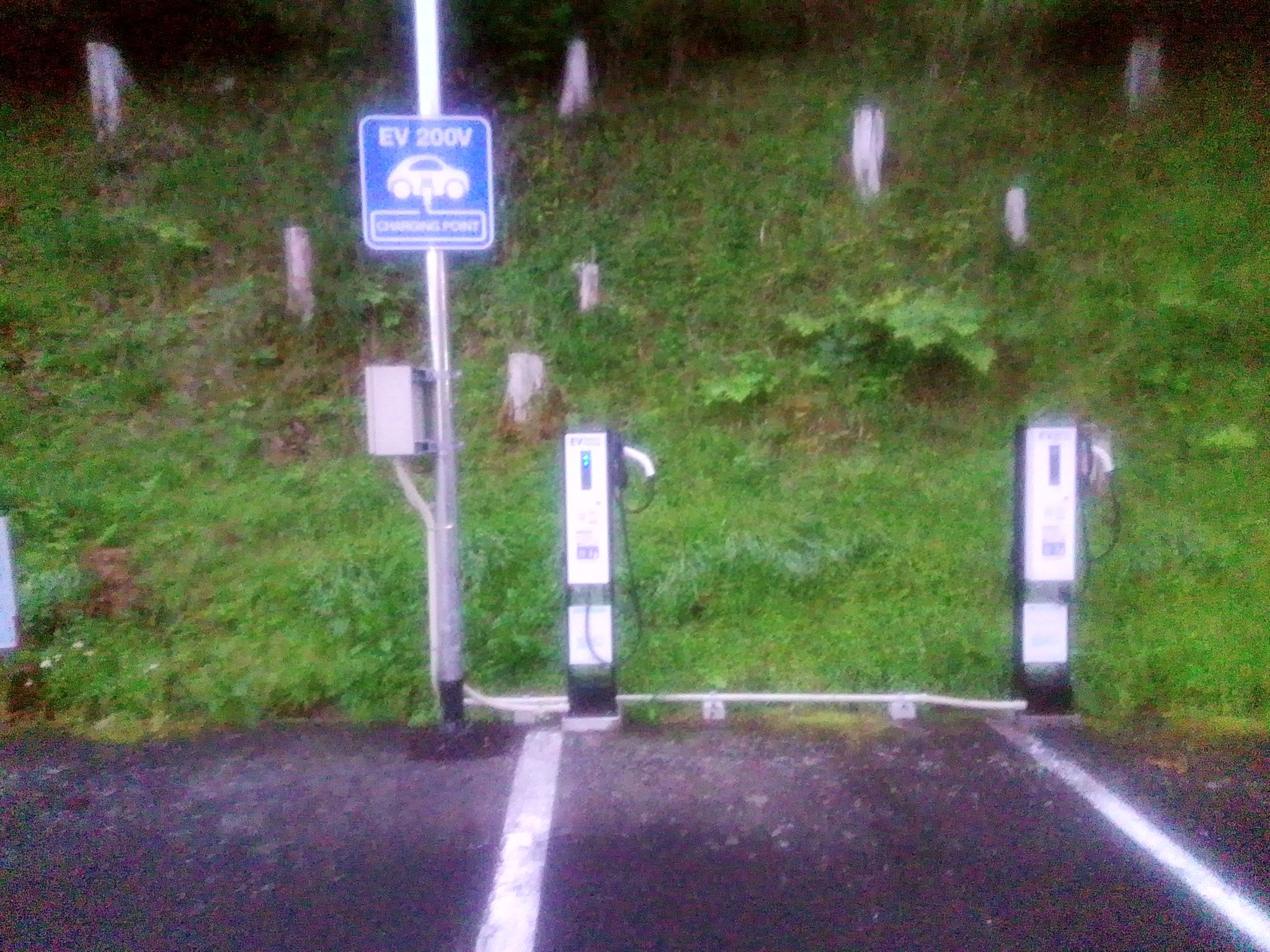
Japan targets 100% electrified new passenger-vehicle sales by 2035 — EVs, PHEVs and FCVs, not pure-EV. Rural regions need significant new distributed generation and charging capacity; grid extension is slow and capital-intensive. Japan's FY2024 CEV subsidies (up to ¥850,000 for an EV, ¥550,000 for a PHEV) now reward charging infrastructure and disaster resilience alongside vehicle performance.
日本は2035年までに新車乗用車販売の100%を電動車(EV・PHEV・FCV)とすることを目標としています——純粋なEVだけではありません。農村部には相当規模の分散型発電・充電能力が必要であり、系統延伸は遅く資本集約的です。2024年度のCEV補助金(EV最大85万円、PHEV最大55万円)は、車両性能に加えて充電インフラや災害対応力も評価します。
Aged sugi plantations impose ecological costs — pollen burden, biodiversity loss — and physical risks: landslide and fire. Active management converts liability into timber revenue; the sugi thinnings are the fuel for the village's biomass CHP, the project's primary energy source — generating round-the-clock baseload electricity and heat.
老齢化した杉の人工林は、花粉被害・生物多様性の喪失といった生態的コストと、土砂崩れ・火災リスクをもたらします。適切な管理により負の資産を木材収益へ転換し、杉の間伐材はプロジェクトの主たるエネルギー源である村のバイオマスCHPの燃料となります——24時間のベースロード電力と熱を生み出します。
Underused former schools and community facilities — such as the former Sugano Elementary School (Mitsue Taiken Koryukan / 体験交流館) and disused village factory buildings — currently impose net maintenance costs on shrinking municipal budgets. Productive reuse turns these into community-anchored facilities — the data center inherits a building, a community, and a story.
旧菅野小学校(御杖体験交流館)などの遊休公共施設や廃工場は現在、縮小する自治体予算に維持管理コストとして負担をかけています。有効活用することで、地域の拠点施設へと転換できます。
Rural broadband and edge-compute capacity continue to lag urban Japan. A small, energy-aligned data center addresses both the connectivity gap and the on-site computation gap at the same time.
農村部のブロードバンドとエッジコンピューティング能力は、都市部に比べて依然として遅れています。エネルギーと連携した小規模データセンターが、接続性と演算能力の両方のギャップを同時に解消します。
The project is the implementation vehicle for Mitsue Village's official, Ministry-of-Environment-funded Renewable Energy Plan (2025). It delivers the plan's "one resilient distributed-energy site" target (currently zero) and its EV-charging priority — and unlocks the village-led 地域脱炭素移行・再エネ推進交付金 (a 2/3–3/4 subsidy on solar/battery/EV, paid through the village).
本プロジェクトは、環境省補助で策定された御杖村の公式再エネ計画(2025年)の実行を担う事業体です。計画が掲げる「レジリエントな分散型電源1拠点」目標(現状ゼロ)とEV充電優先を実現し、村主導の地域脱炭素移行・再エネ推進交付金(太陽光・蓄電池・EVの補助率2/3〜3/4、村経由)を引き出します。
This initiative is highly relevant and timely. It addresses both the past and present reality of rural depopulation and the socio-economic ‘impoverishment’ - or ‘desertification’ as discussed in the context of European Cohesion Policy - while also being forward-looking: engaging critically with the AI and digital economies, and confronting the global problem of monocultures and plantations that deplete biodiversity and erode resilient, thriving landscapes.
I see great relevance in such an idea — not least for the many EU countries that, like Japan, suffer from the ageing and depopulation of rural areas, with multiple negative social, ecological and economic impacts.
Re-imagining towns and villages is a wonderful and essential project. Combining ecological resilience (the replacement of cedar) with social (trust and revival), cultural (a new sense of place) and economic resilience is very promising.
Olivia Bina Co-author, “Transforming Knowledge Systems for Life on Earth” 「地球上の生命のための知識システムの変革」共著者このイニシアチブは、非常に時宜を得た重要な取り組みです。農村部の過疎化という過去から現在に至る現実と、欧州結束政策の文脈で議論される社会経済的な「貧困化」—あるいは「砂漠化」—に向き合うと同時に、未来を見据えた視点も持っています。AIとデジタル経済と批判的に関わり、生物多様性を損ない、弾力性のある豊かな景観を侵食するモノカルチャーや植林という地球規模の問題にも真摯に向き合うものです。
このような構想には大きな意義があると感じています。とりわけ、日本と同様に農村部の高齢化と過疎化に悩み、社会的・生態的・経済的に複合的な悪影響を受けているEU加盟国の多くにとっても、示唆に富んでいます。
まちや村を再想像することは、素晴らしく、そして不可欠なプロジェクトです。生態的な回復力(スギの代替)と、社会的(信頼の醸成と再生)・文化的(新たな場所感覚)・経済的な回復力を組み合わせるアプローチは、非常に有望です。
Founder of the Mitsue Project. One of the founders of YR-Design, a design and technology studio based in Mitsue Nara , and a core contributor to Safecast — the open environmental monitoring network established after Fukushima. His work spans interaction design, hardware development, and open-source environmental data.
御杖プロジェクトの創設者。奈良県三江市に拠点を置くデザイン・テクノロジースタジオ、YR-Designの創設者の一人であり、福島原発事故後に設立されたオープンな環境モニタリングネットワークであるSafecastの中核メンバーでもある。インタラクションデザイン、ハードウェア開発、オープンソースの環境データなど、幅広い分野で活動している。
Executive Chair of Blues, Software pioneer; former Chief Software Architect at Microsoft. Decades of work on distributed systems, collaboration software, and the discipline of small, accountable platforms.
Blues エグゼクティブチェア, ソフトウェアの先駆者、マイクロソフト元チーフソフトウェアアーキテクト。分散システム・コラボレーションソフトウェア・小規模で説明責任を果たすプラットフォームの設計原則に数十年従事。
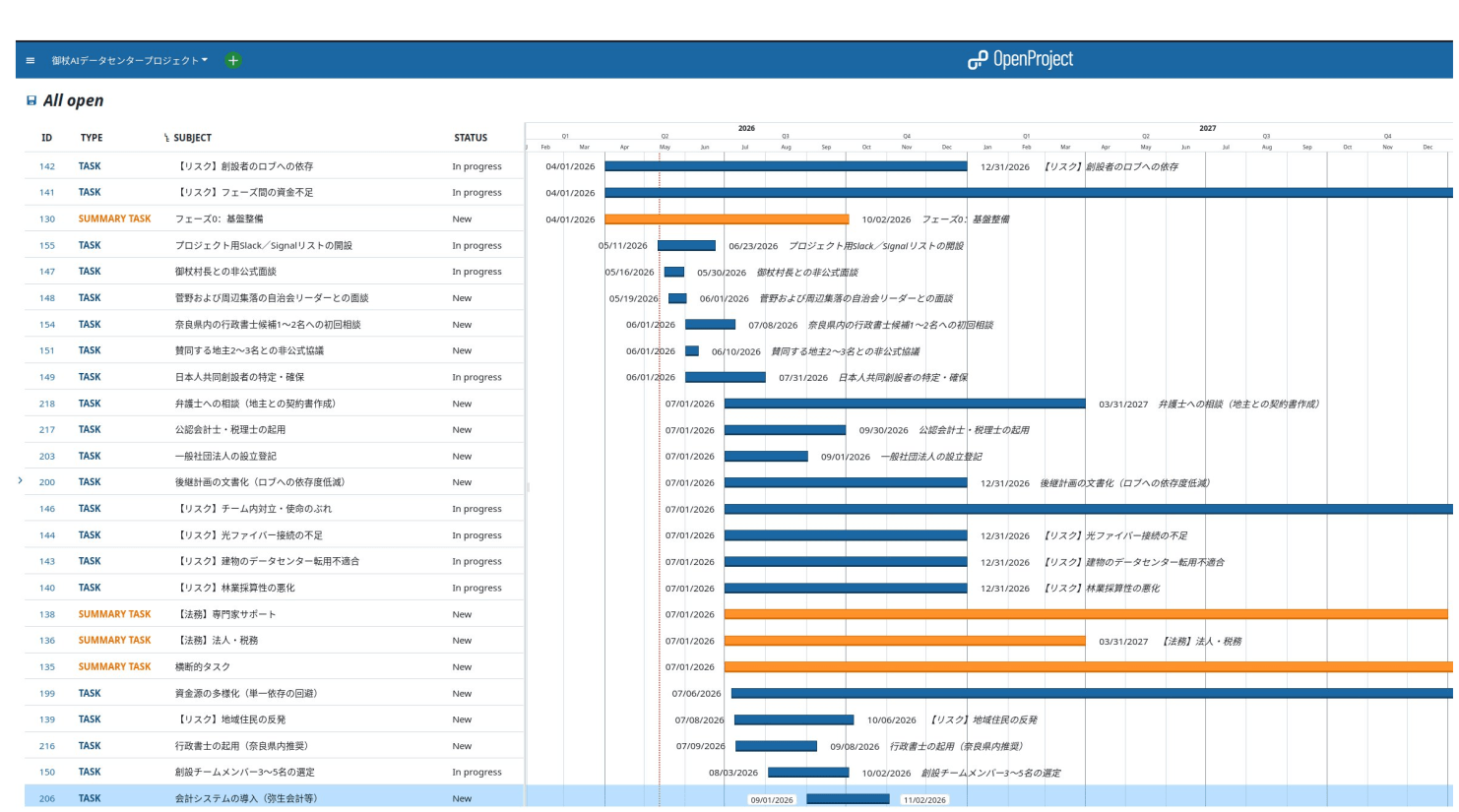
Project Manager.
プロジェクトマネージャー。
Professor, Osaka University Graduate School of Economics / Representative Director, Inochi Forum
「大阪大学名誉教授・いのち会議代表理事」
Co-Representative Director, Transom Elvin Zoet co-leads Transom, advising clients from SME to Fortune 500, Japanese and multinational. He teaches at Keio Business School. He holds a PhD in Critical Management Studies from Utrecht University.
共同代表取締役、Transom エルヴィン・ゾエットは、Transomの共同代表取締役として、中小企業からフォーチュン500企業まで、日系・外資系を問わず幅広いクライアントへのアドバイザリー業務を担っています。慶應義塾大学ビジネススクールで教鞭を執るほか、ユトレヒト大学にて経営批判学の博士号を取得しています。
Co-leads Transom, advising clients from SME to Fortune 500, Japanese and multinational. She teaches at Keio Business School. She researches family business succession at the University of St. Gallen.
共同代表取締役、Transom 吉子・ゾエット=鈴木は、Transomの共同代表取締役として、中小企業からフォーチュン500企業まで、日系・外資系を問わず幅広いクライアントへのアドバイザリー業務を担っています。慶應義塾大学ビジネススクールで教鞭を執るほか、ザンクト・ガレン大学においてファミリービジネスの事業承継を研究しています。
| Source | Committed / Pipeline | |
|---|---|---|
| L1 | Founder / private capital · 創業者・民間資本 Self-funded ramp; founder commitments 自己資金によるスタートアップ費用;創業者コミットメント | ¥6M |
| L2 | Government grants · 政府助成金 NEDO · METI · Nara Prefecture · Mitsue Village 地域脱炭素移行・再エネ推進交付金 (2/3–3/4, via village) NEDO・経済産業省・奈良県・御杖村 地域脱炭素移行・再エネ推進交付金(補助率2/3〜3/4、村経由) | ¥115M |
| L3 | Foundations · 財団 Nippon Foundation · Japan Fund for Global Environment · Toyota Foundation 日本財団・地球環境基金・トヨタ財団 | ¥33M |
| L4 | Corporate partnerships · 企業パートナーシップ Dutch and Japanese corporates; CSR-aligned オランダ・日本の企業;CSR連携 | ¥35M |
| L5 | Operating revenue · 事業収益 Hosting fees · FIT/FIP · EV charging · J-Credits ホスティング料・FIT/FIP・EV充電料金・Jクレジット | ¥3M |
| Total raised / committed · 確約・調達済み合計 | ¥192M | |
| BAC (project budget baseline) · BAC(事業予算ベースライン) | ¥220M | |
| Total project budget (incl. reserve) · 事業総予算(予備費含む) | ¥245M |
Every material decision begins with the wellbeing of Mitsue residents and landowners. Not as marketing — as a procedural rule.
あらゆる意思決定は、御杖の住民と土地所有者の幸福を起点とします。マーケティングではなく、手続き上のルールとして。
Environmental data, financial records, and methodologies are published. The default is open; exceptions are documented.
環境データ・財務記録・手法はすべて公開します。デフォルトはオープン。例外は文書化します。
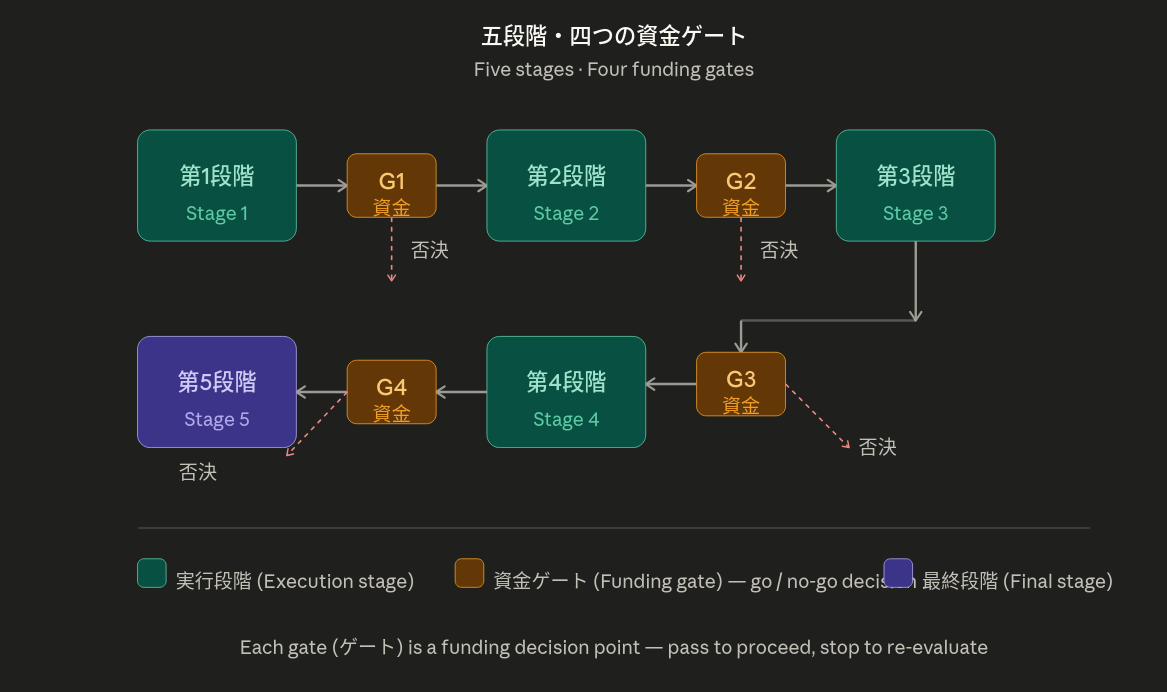
A 25-year horizon. No premature scaling. Funding gates are honored even when delay is uncomfortable.
25年という時間軸。拙速なスケールアップは行いません。遅延が不本意であっても、資金ゲートを遵守します。
Documentation discipline is treated as a deliverable, not an afterthought. The point is that other villages can copy this.
文書化の規律は成果物として扱います。他の村がこのモデルを複製できることが目的です。
Small enough to remain accountable to the community that hosts it. Hyperscale economics are explicitly not the goal.
受け入れてくれるコミュニティに対して説明責任を果たせる規模を維持します。ハイパースケール経済は明示的に目標としません。
No political alignment. Positions are confined to the project's mission and to what the published evidence supports.
特定の政治的立場を取りません。主張はプロジェクトの使命と、公開された証拠が支持する範囲に限定します。
The project is currently in pre-foundation phase. We're identifying patient capital, advisory partners, and Japanese co-founders with rural credibility. If your time horizon matches ours, we would welcome the conversation.
プロジェクトは現在、設立準備段階にあります。長期的視点を持つ出資者、助言パートナー、農村に信頼のある日本人共同創業者を探しています。時間軸が一致すると感じていただけるなら、ぜひご連絡ください。